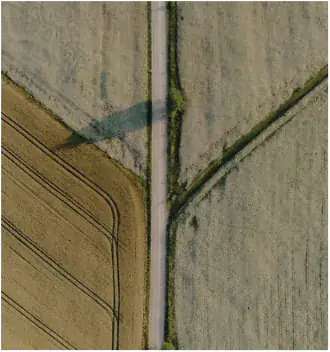
MarketFragmentation
Disconnected registries and inconsistent provenance boost transaction costs.

The Environmental Board of Trade
A member-led board of trade connecting corporate buyers, supply chains, and farmers through independent verification, geospatial tracking, and Nasdaq-backed market infrastructure across Scope 3 insetting, Section 45Z tax credits, carbon removals, and other environmental assets.








Today’s environmental markets are constrained by fragmented systems, inconsistent audit standards, and greenwashing risks that can frustrate buyers and leave producers underpaid.
The Environmental Board of Trade (EBOT) replaces isolated, custom programs with a single, neutral market infrastructure, giving farmers a dependable way to monetize stewardship and corporate buyers the investment-grade proof they need.
Disconnected registries and inconsistent provenance boost transaction costs.
Lengthy and manual audit and verification cycles that delay commercial execution.

Growing concerns regarding double-counting, greenwashing, and limited price visibility.

Bespoke program rules restrict liquidity and long-term participation.
Supporting agri-food buyers in quantifying and allocating supply-chain emissions reductions aligned with GHGP and SBTi FLAG frameworks.
Providing the carbon intensity (CI) documentation and traceable chain-of-custody records designed to support tax credit substantiation and audit readiness.
Serving as the underlying data infrastructure for the issuance, allocation, and retirement of carbon credits.
Supporting independently issued, transferred, and retired environmental attributes for eligible voluntary or compliance applications in water and biodiversity.
EBOT is structured to have commercial market rules and integrity-critical functions.
While EBOT manages member relationships and commercial standards, independent bodies handle methodology approvals, audits, and asset issuance. It is designed to harmonize and operationalize existing scientific methodologies and market standards rather than replace them.
 Commercial arrangementsFee policies and membership structuresMarket educationStandardized contract forms
 Methodology approvalIndependent audit and verification standardsUncompromising issuance criteria
 Digital custodial infrastructure for atomic issuance, transfer, and retirementGeospatial tracking and boundary conflict detectionNeutral third-party operational execution


A clear, repeatable, and audit-ready pathway to monetize regenerative stewardship.

One standardized framework instead of managing dozens of conflicting buyer requirements.

Control over farm data with transparent attribute ownership rights.

Provide clear chain-of-custody, auditable data, and verifiable outcomes that build trust across market participants.
EBOT operates as a member-governed 501(c)(6) trade association. Founding and Charter members gain inaugural governance rights and unique economic alignment through Economic Seats - perpetual revenue participation rights tied to institutional net revenues including transaction fees, assessment fees, and data licensing.
A governance committee structure, including a Producer Advisory Committee, Corporate Buyer Committee, Scientific Advisory Council, Methodology Review Committee, and Market Integrity Committee will guide the work of the EBOT.
Membership tiers
Founding, Charter, and General Membership benefits at a glance.
Tier 1
Market participants, suppliers, and enterprise buyers entering after the initial formation phase.
Access to standardized contracts and platform
Participation in trade association activities
Standard volume rebates and fee tiers

Tier 2
Strategic supply chain participants seeking early alignment and preferential economics.
Charter Board Representation (6-10 seats)
Early alignment and preferential economics
Ongoing "Economic Seat" revenue participation

Tier 3
Market leaders with significant operating scale, market reach, or strategic supply chain footprint.
Inaugural Board Seats (4-6 seats)
Strongest influence on commercial rules
Ongoing "Economic Seat" revenue participation